
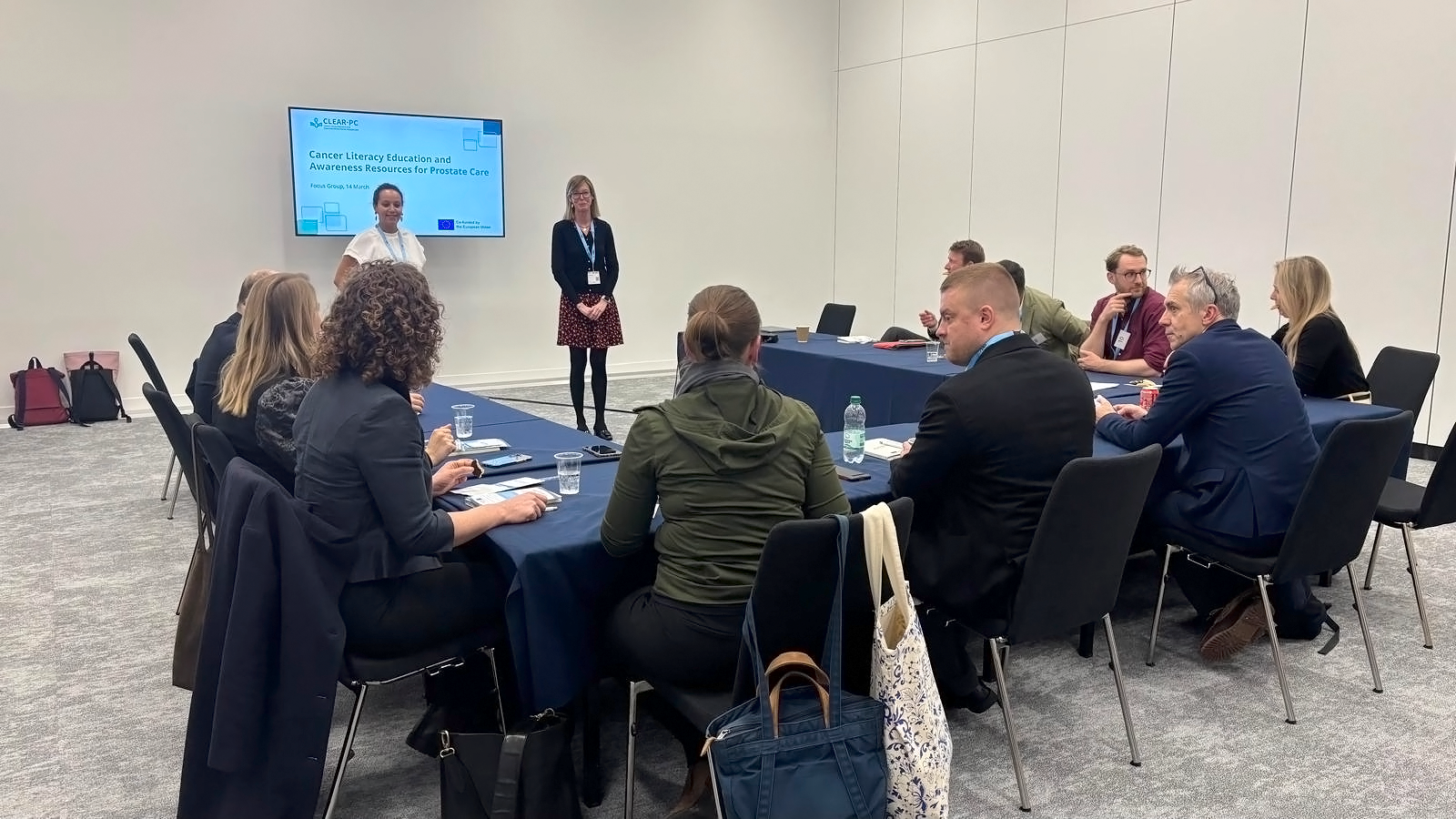
On 14 March 2026, the CLEAR-PC project conducted its first focus group with urologists at the European Association of Urology Congress 2026 (EAU26), bringing together nine healthcare professionals from different countries to share their experiences of implementing shared decision-making in prostate cancer screening and treatment. Led by Deborah Bekele (Universidad Miguel Hernández), a researcher within Work Package 4 (WP4), and supported by Blanca Lumbreras and Marina López (Universidad Miguel Hernández), the session aimed to identify good practices, knowledge gaps and barriers that can inform the development of CLEAR-PC’s strategy to improve health literacy, communication and patient engagement in prostate cancer care.
The focus group provided an opportunity for urologists to discuss their experiences and perspectives from real-world practice. Understanding the challenges healthcare professionals face when involving patients in decisions about screening and treatment is essential to developing health literacy approaches that are practical, relevant and responsive to clinical needs.
Building the CLEAR-PC strategy
The insights gathered during the session will contribute to the broader work of WP4, which aims to map health literacy levels at all stages of prostate cancer care across Europe, as well as to the wider CLEAR-PC strategy. By identifying existing good practices alongside areas where further support or knowledge is needed, the project aims to strengthen health literacy and shared decision-making and help prostate cancer patients play a more active role in their care.
This first focus group marks the beginning of a broader WP4 strategy. Over the coming months, WP4 will conduct additional focus groups and interviews with prostate cancer patients, caregivers, general practitioners, psycho-oncologists, psychologists, members of the general population, and vulnerable and minority groups in different European countries.
Bringing together these different perspectives will help ensure that the health literacy resources developed by the CLEAR-PC project are inclusive, accessible and useful for the people who will ultimately use them.