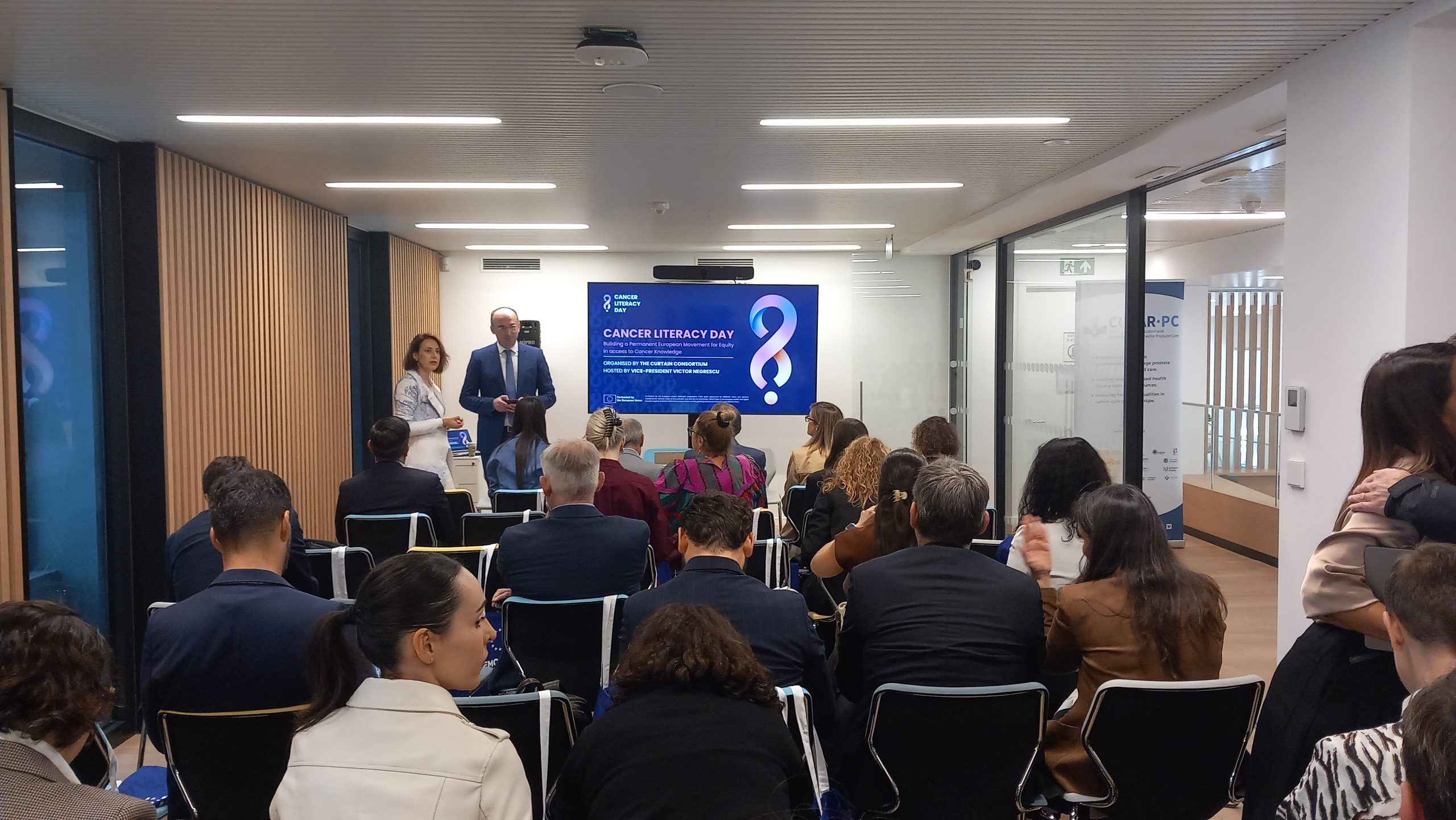
The inaugural Cancer Literacy Day took place on 14 October 2026 at the European Parliament Info Hub in Brussels, Belgium, marking the launch of a permanent European movement dedicated to advancing equitable access to cancer information.
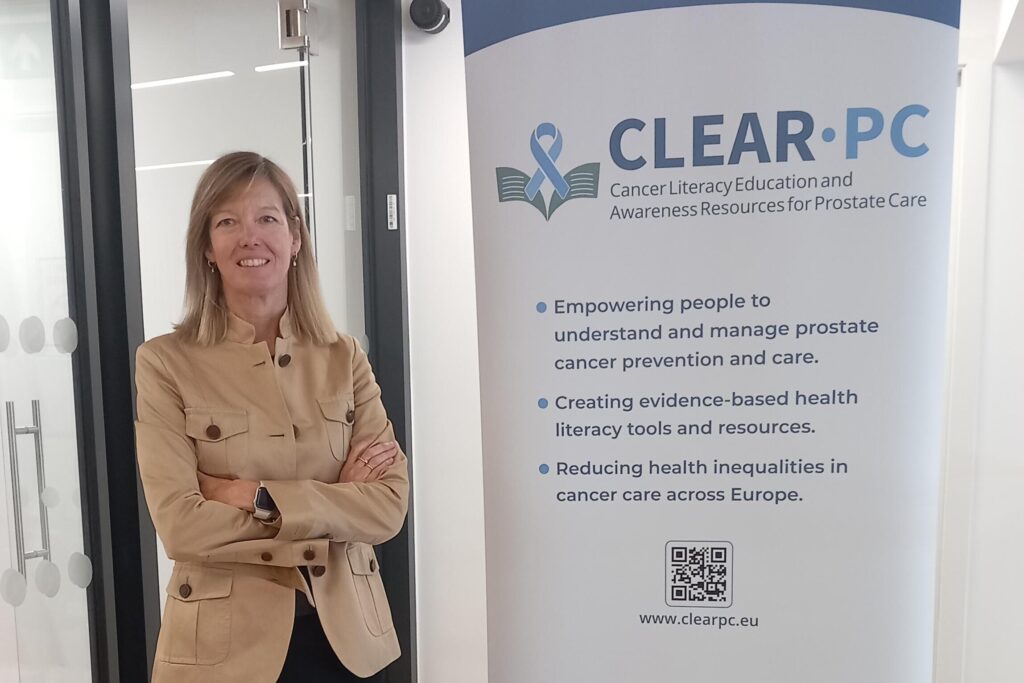
Blanca Lumbreras, Professor at Universidad Miguel Hernández de Elche and coordinator of the CLEAR-PC project (Cancer Literacy Education and Awareness Resources for Prostate Care), addressed participants on the importance of equipping healthcare professionals with targeted training and practical tools in health literacy, shared decision making and effective communication.
Organised by the CURTAIN project (Beating Cancer Inequalities through Literacy in Europe) and hosted by Victor Negrescu, Vice-President of the European Parliament, the event brought together experts for several thematic sessions focusing on cancer literacy for citizens and patients, for healthcare professionals, and for organisations and health systems.
Supporting Healthcare Professional’s Education
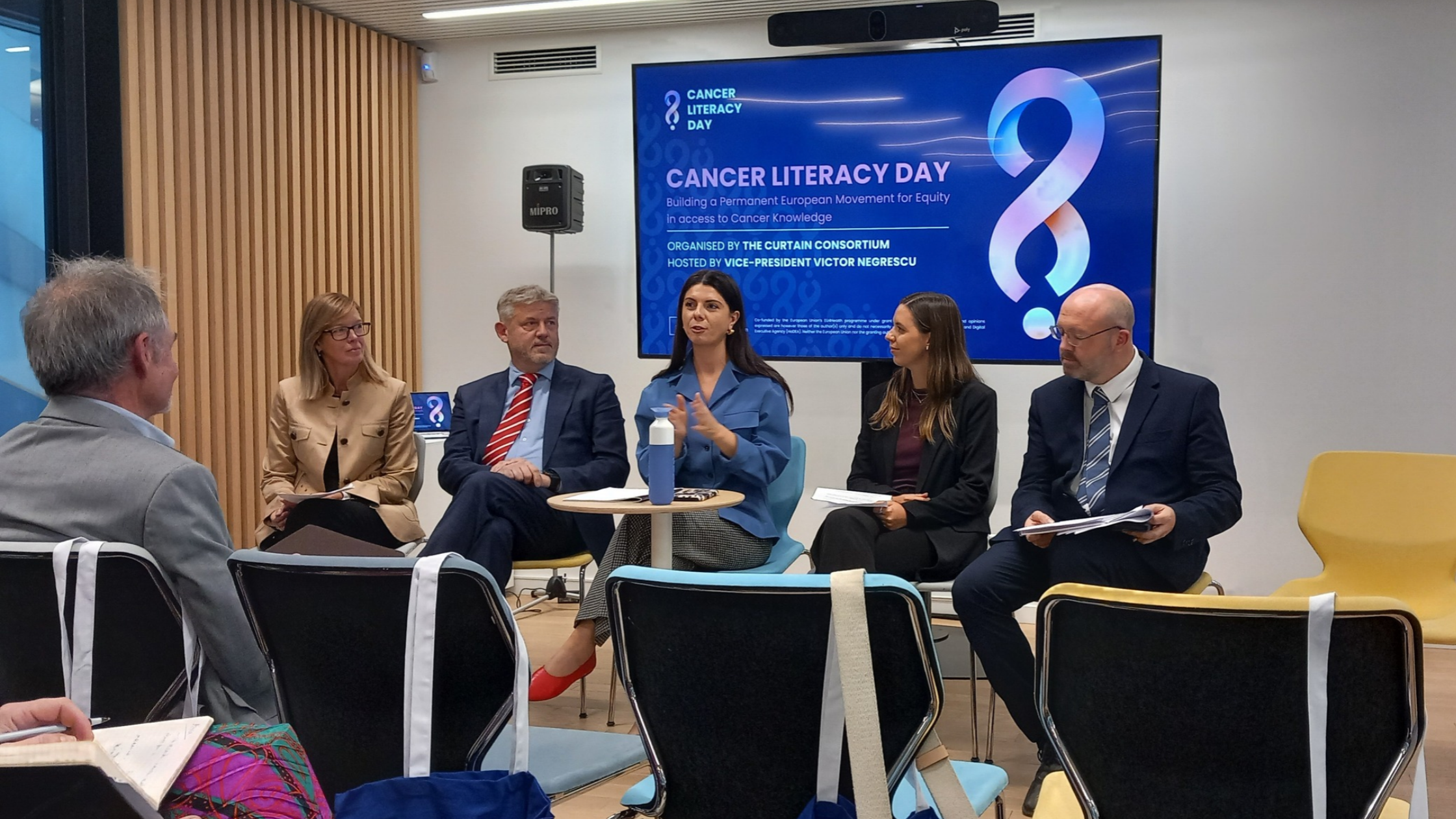
During the panel session “Improving cancer literacy for healthcare professionals”, Blanca Lumbreras highlighted the responsibility of healthcare professionals and health systems to ensure that cancer information is clear, accessible and easy to understand.
However, healthcare professionals often lack the resources and skills to communicate complex medical information effectively. An analysis of medical curricula conducted by the CLEAR-PC project found that health literacy was explicitly mentioned in only 5 of 28 assessable curricula assessed, while plain language was mentioned in just 2.
Blanca outlined several key measures to better support healthcare professionals, including integrating training in shared decision making, health literacy and plain language communication into medical curricula; allowing more time for discussions with patients; providing better information in the right format and at the right time; and incorporating patients’ understanding as a quality criterion in clinical practice.
She contributed to the discussion alongside Michel R. van Balken, coordinator of the BCLEAR project and member of the European Association of Urology; Richard Price, representing the European Cancer Organisation; and Maria Escurriola, representing the CGI-Clinics and IRB Barcelona.
The session highlighted the importance of enhancing healthcare professionals’ communication skills and educational resources to help patients navigate every stage of the cancer pathway, from screening and early diagnosis to treatment decisions and palliative care.
A European Movement to Address Cancer Inequalities
With nearly 2.8 million new cancer cases reported annually across the EU, disparities in cancer prevention, early detection, treatment and care persist. Cancer literacy, the ability to find, understand, evaluate and act on cancer-related information, was highlighted as the key driver of health equity across Europe.
Cancer Literacy Day brought together a collaborative network of organisations and EU projects, including the five EU4Health projects of the Cancer Health Literacy Cluster CLEAR-PC, CURTAIN, CHOICE, BCLEAR, and iNTERVENE. Participants discussed barriers and best practices and made recommendations to improve cancer literacy among citizens, patients, healthcare professionals, organisations and health systems.
A central message emerging from the event was that responsibility for improving cancer literacy cannot rest only on individuals. All stakeholders, including policymakers, healthcare professionals, organisations, health systems and educators, have a role to play in developing and implementing health literacy initiatives, strategies and policies that enable people to make informed decisions about their health.
Through its participation in European initiatives such as Cancer Literacy Day, the CLEAR-PC project continues to promote health literacy, strengthen communication between healthcare professionals and patients, and support shared decision making in prostate cancer care. By providing citizens, patients and healthcare professionals with the knowledge and tools they need, the project aims to contribute to more accessible, equitable and patient-centered prostate cancer care across Europe.