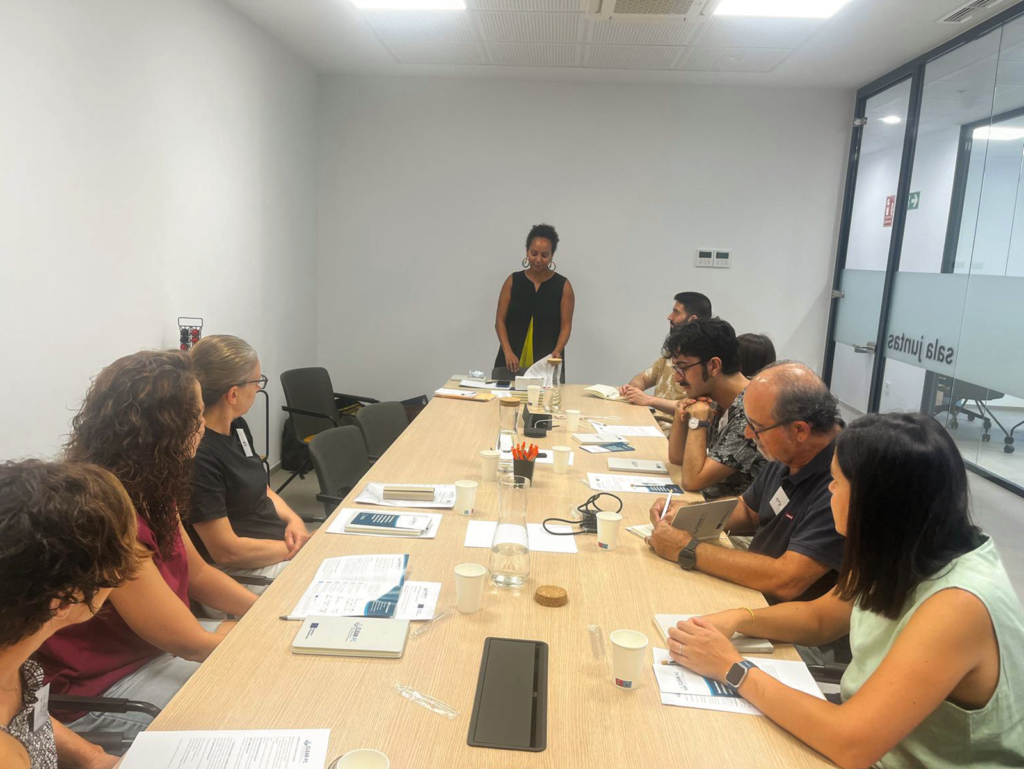
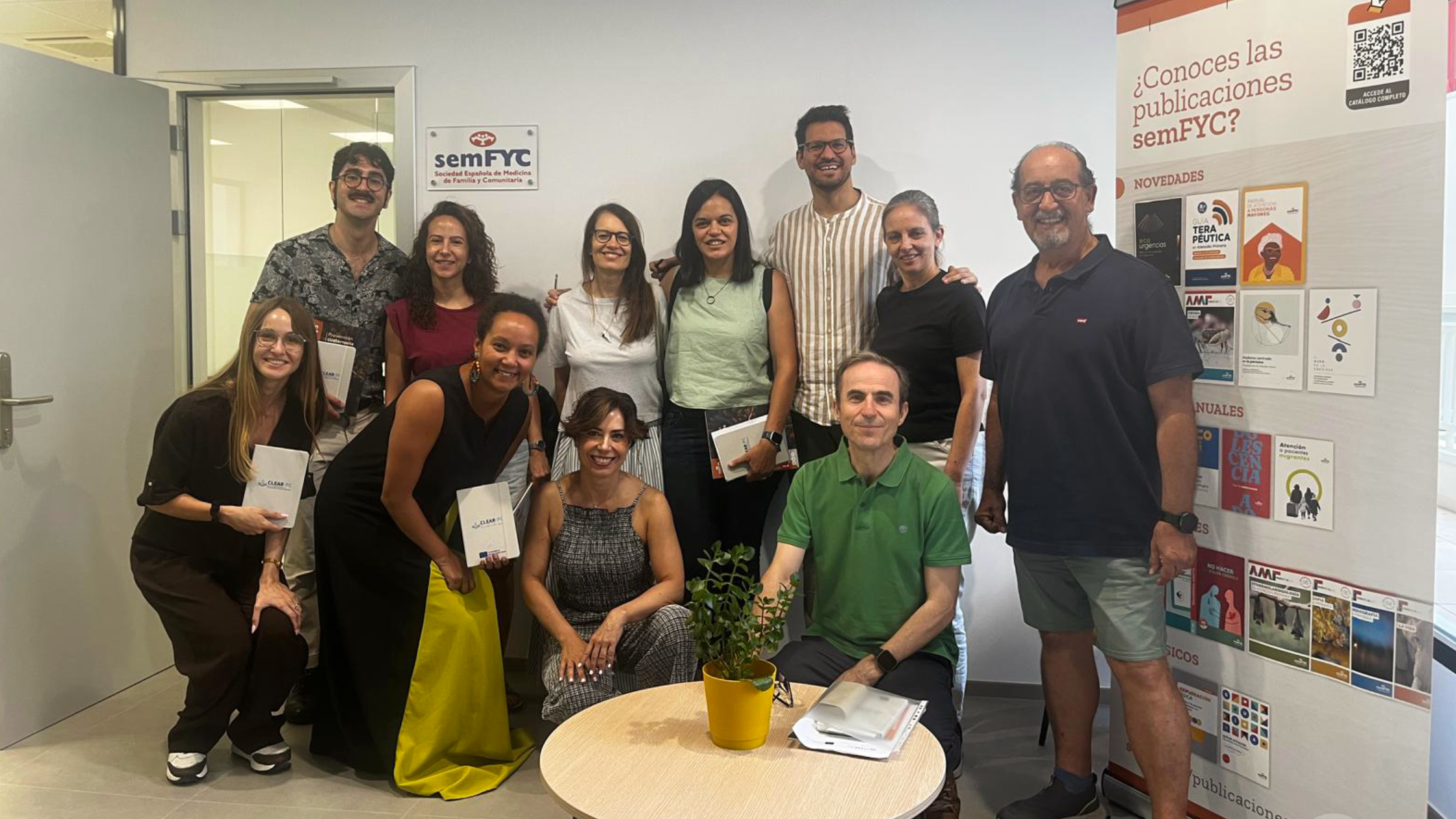
The CLEAR-PC project held its third focus group in Madrid, Spain, on 21 July 2026, bringing together eight family doctors to explore their experiences supporting men with suspected or diagnosed prostate cancer and their families.
The session, organised by Deborah Bekele (Universidad Miguel Hernández de Elche), Laura del Álamo Ferrández and María Falcón (Universidad de Murcia) with the support of Ignacio Párraga and Juan Antonio López from the Spanish Society of Family and Community Medicine (semFYC), focused on how participants communicate with patients throughout the prostate cancer care pathway, the information needs they identify at different stages, and how they support men in making decisions about their health and care.
Primary care and prostate cancer
Family medicine plays an essential role in helping people access, understand, and use information to participate actively in decisions about their health. This, in turn, can contribute to better health outcomes and help make the care pathway more patient-centred.
Prostate cancer has specific challenges when it comes to communication and shared decision-making. Concerns, fears, expectations, and personal values can all have an important influence, particularly when men face uncertainty, different treatment options, and potential impacts on their quality of life.
Thus, it is important to understand how people are supported by primary care throughout the different stages of the prostate cancer journey. During the focus group, family doctors shared how they deal with the personal and emotional dimensions, as well as strategies that influence communication and patient participation in decision-making.
Diverse perspectives to build the CLEAR-PC strategy
As part of the CLEAR-PC project, two more focus groups have already been conducted with urologists and psycho-oncologists, and more will be organised in the upcoming months to understand the experiences of prostate cancer patients, healthcare professionals, the general population, and vulnerable and minority groups from different EU countries.
The findings from the focus groups, which will be summarised in the upcoming project deliverable 4.2, will help the consortium identify both barriers and facilitators across the prostate cancer care pathway.
Ultimately, they will be part of the evidence that inform the development of the CLEAR-PC strategy, a set of accessible health literacy resources aimed at improving communication, patient awareness, engagement, and shared decision-making for people affected by prostate cancer across Europe.